


 Published by Sue Johns-Chapman
Published Date 03.08.2026
Published by Sue Johns-Chapman
Published Date 03.08.2026 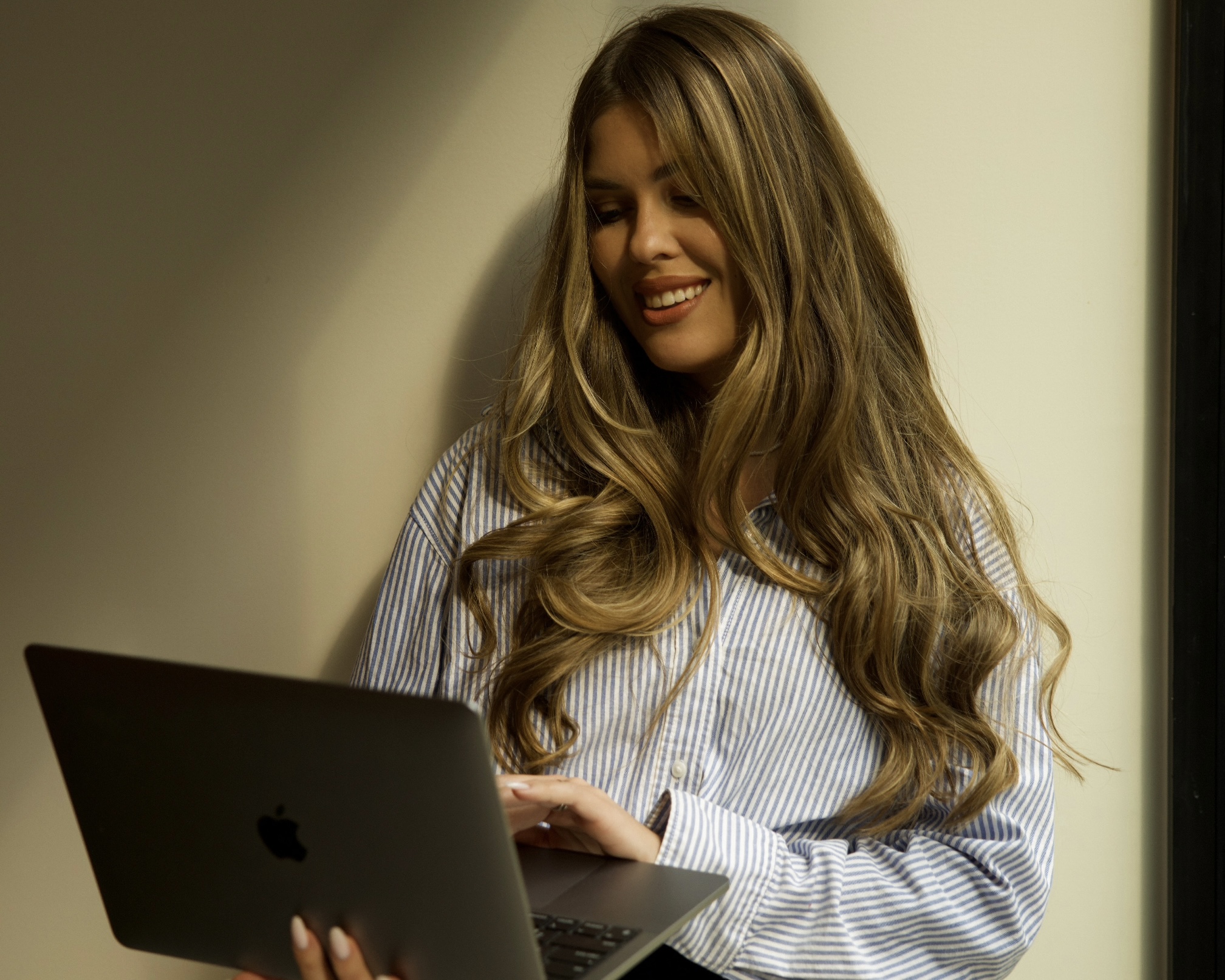
An interview with Yelyzaveta Rybalchenko, Social Media Lead at Jacob & Co. and judge for the UK Social Media Awards 2026 and UK eCommerce Awards 2026
The team at Don’t Panic, the name behind some of the most respected awards across the globe, asked Social Media and eCommerce Awards judge, Yelyzaveta, what qualifies her to be a judge, what makes great social media in the luxury market, and what makes a winning award entry.
Experience and Work
Q: You have spent more than a decade in influencer marketing across Europe and the US. What are you working on now?
I lead social media at Jacob & Co., the New York luxury watch and jewellery house. Before that I was Head of Social Media at Lamel Cosmetics, a mass-market beauty brand, where I ran the ambassador programme and led the US market entry. Those two roles sit at opposite ends of the market, and that contrast is the most useful thing I have. Luxury teaches you that one placement can carry a quarter. Mass-market teaches you that a thousand small creators, properly organised, can outperform a campaign with a much bigger budget. Most of the arguments I have with briefs come down to people applying one logic to the other market.
Q: Influencer marketing and eCommerce are usually run by separate teams, sometimes with separate agencies. Where do they actually meet?
They meet at the moment the viewer decides to leave the feed. Everything before that is the influencer team’s problem and everything after is eCommerce’s problem, and the gap between them is where most budget is lost. A creator can generate genuine intent and then send that person to a product page that loads slowly, shows a different shade name, or has no reviews yet. The campaign gets blamed. In practice the fix is boring: brief the eCommerce team on the creative before it goes live, make sure the products featured are actually in stock in the markets where the creator has audience, and agree in advance which metric each team is accountable for. That conversation takes an hour and it changes the result more than another round of creator selection.
Q: What is the biggest misconception brands still have about influencer marketing driving sales?
That reach is a proxy for demand. Reach tells you how many people had the opportunity to see something. It says nothing about whether the audience trusts that creator on that category. I have seen accounts with excellent audience quality scores and clean fraud checks that still convert badly, because the audience follows the person for entertainment and would never take a purchase recommendation from them. The reverse is also true. Smaller creators with narrow, obsessive audiences behave more like a sales channel than a media channel. The useful question is not “how big is this account” but “what is this audience used to doing when this person recommends something”.
Building programmes
Q: At Lamel you built an ambassador programme that scaled well beyond a standard seeding list. What made it work?
Structure and status, not payment. It was built as a game with visible levels, tasks and rewards, so participants could see where they stood and what the next step was. The people at the top were not there because we paid them the most, they were there because progression was public and they had earned it. That changes the psychology completely. A paid creator delivers the deliverable. An ambassador with a rank to defend keeps posting between campaigns. The other thing that mattered was tracking. Because referrals were tracked properly, we could see which ambassadors actually moved product rather than guessing from likes, and we could reward accordingly. A programme without attribution becomes a popularity contest within about two months.
Q: How much does the playbook change between luxury and mass-market?
Almost entirely, apart from the fundamentals. In mass-market beauty you are optimising for volume, repetition and speed. You want many voices saying a similar thing in a short window, and you can accept a fairly high failure rate at the individual creator level. In luxury you are optimising for context. Fewer partners, longer relationships, and a much higher cost to being seen in the wrong environment. A single badly matched placement can do more damage to a luxury brand than fifty mediocre ones do to a mass-market brand. What stays constant is the discipline: know what you are measuring before you start, and be honest about what the channel can and cannot do.
The judging seat
Q: You are judging both the UK Social Media Awards and the UK eCommerce Awards this year. What separates a strong influencer entry from an average one?
Causality. Average entries show that something good happened during the campaign period. Strong entries show why the campaign caused it. That means a baseline, a stated constraint, and a clear explanation of what would have happened without the activity. The entries I score highest are often not the ones with the biggest numbers. They are the ones where I can follow the reasoning from objective to tactic to result without having to fill in gaps myself. Judges are practitioners. We know what a hard problem looks like, and we know when a number has been chosen because it flattered rather than because it mattered.
Q: What mistakes do you see most often around measurement in entries?
Three, mainly. First, no baseline, so a percentage increase is impossible to interpret. Second, metric switching, where the objective is stated as sales and the results section quietly reports impressions. Third, screenshots used as evidence of impact rather than as illustration. There is also a quieter problem: entries that present a result without explaining the attribution model behind it. If you claim revenue from an influencer campaign, tell us how you attributed it, including the limitations. Acknowledging a limitation does not weaken an entry. It usually strengthens it, because it signals that the team understands its own data.
Q: Does the current generation of fraud detection tooling solve the audience quality problem?
It solves part of it. The tools are good at what they were built for, which is detecting bought followers, engagement pods and suspicious growth patterns. What they cannot tell you is whether a real, human, engaged audience is the right audience. A creator can pass every fraud check and still be a poor commercial fit because the audience is in the wrong markets, the wrong age bracket, or simply not in a buying relationship with that creator. Fraud detection is a hygiene step, not a selection method. The selection work still has to be done by a person who understands the category.
Practical advice
Q: What would you tell a team planning influencer activity that they intend to enter for an award next year?
Write the entry before you run the campaign. Not the finished text, but the structure: what is the objective, what is the constraint, what will you measure, and what evidence will you have at the end. If you cannot answer those four questions before you start, you will not be able to answer them convincingly afterwards either, and you will spend the week before deadline reverse-engineering a story out of whatever data survived. The teams that win consistently are not the teams with the most budget. They are the teams that decided what success meant while they still had time to instrument for it.
Q: And finally, what are you watching over the next year or two?
The shift of creator content into owned commerce surfaces. Brands are starting to treat creator assets as product page content rather than campaign content, and that changes how you contract, how you brief and how you value a partnership. A piece of content that lives on a product listing for eighteen months is a different commercial object from a story that lives for twenty-four hours, and the industry has not settled on how to price that yet. Whoever gets that right will have a real advantage.
Meet the Author
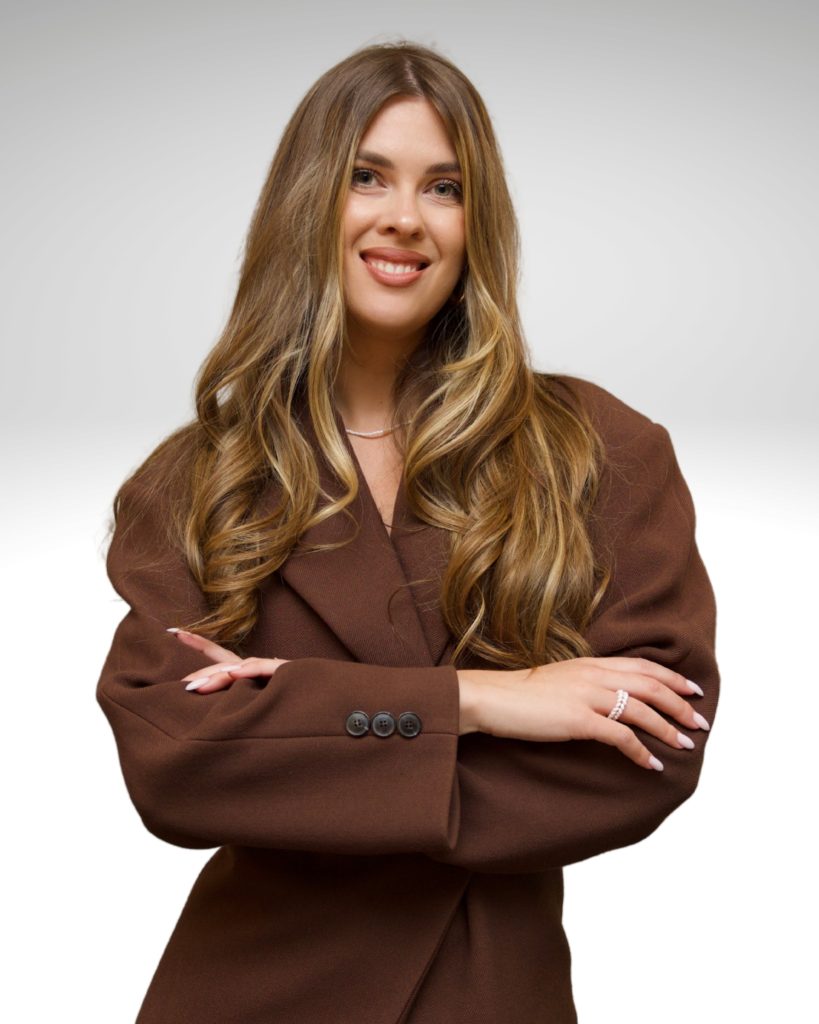
Yelyzaveta Rybalchenko is Social Media Lead at Jacob & Co., the New York luxury watch and jewellery house. She has more than ten years of experience in influencer marketing, ambassador programmes and brand scaling across European and US markets, previously as Head of Social Media at Lamel Cosmetics. She serves on the judging panels for the UK Social Media Awards 2026 and the UK eCommerce Awards 2026, and is a peer reviewer for academic journals in marketing and economics.